logo
player background
live avator

5s
Total
0
Today
0
Total
0
Today
0
  • What would you like to know?
    Company Advantages Sample Service Certificates Logistics Service
Online Chat WhatsApp Inquiry
Auto
resolution switching...
Submission successful!
Zhenglan Cable Technology Co., Ltd
Products
News
Home >

China Zhenglan Cable Technology Co., Ltd Company News

Contacts
Contacts: Miss. Linda Yang
Fax: 86-371-61286032
Contact Now
Mail Us

What principles should be followed in selecting power cables?(2)

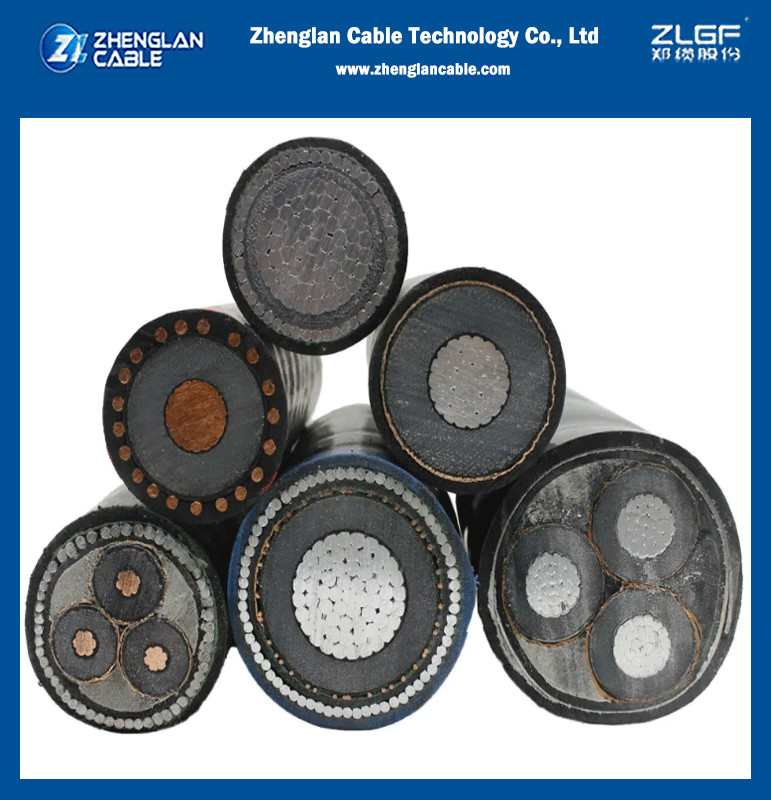
What are the rated voltage levels of power cables, and how to determine them according to different places? 1. The rated voltage levels of power cables are mainly divided into the following categories: 1-1. Low-voltage cables: suitable for fixed laying on AC 50Hz, rated voltage 3kV, and below transmission and distribution lines for transmitting electric energy. 1-2. Medium and low voltage cables: generally refer to cables of 35kV and below, including polyvinyl chloride insulated cables, polyethylene insulated cables, and cross-linked polyethylene insulated cables. 1-3. High-voltage cables: generally 110kV and above, using polyethylene cables and cross-linked polyethylene insulated cables. 1-4. Ultra-high voltage cables: voltage levels between 275 and 800 kV. 1-5. UHV cables: voltage levels of 1000 kV and above. 2. When determining the rated voltage level of cables according to different places, the following factors need to be considered: 2-1. System nominal voltage: the rated voltage of the cable must be greater than or equal to the rated voltage of the network in which it operates. For example, if the nominal voltage of the system is 220/380V, the rated voltage of the cable should meet this requirement. 2-2. Maximum operating voltage: The maximum operating voltage of the cable shall not exceed 15% of its rated voltage. 2-3. Technical requirements: When selecting a cable model, the development of the cable industry and technical policies of various countries should be taken into account while meeting the technical requirements of the cable laying occasion.
2024/10/15

What is shielded cable? What is the cable shield?

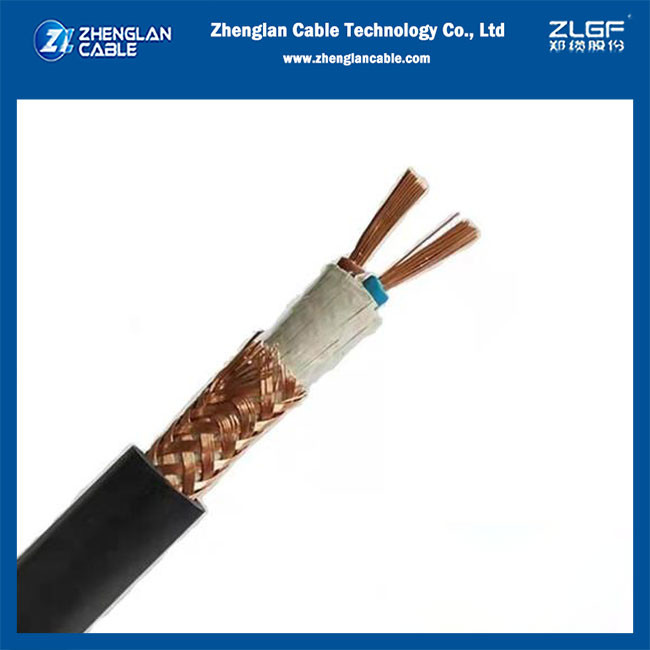
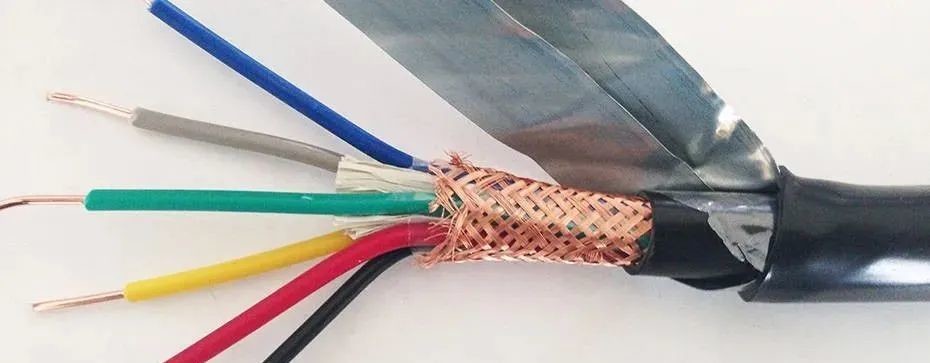
Shielded cable has the word "shielded" in it. As the name implies, it is a cable with the ability to resist external electromagnetic interference formed by adding a shielding layer to the transmission cable. The so-called "shielding" in the cable structure is also a measure to improve the distribution of the electric field. The cable conductor is made of multiple strands of wires twisted together. It is easy to form an air gap between it and the insulation layer. The surface of the conductor is not smooth, which will cause electric field concentration. 1. Cable shielding layer 1). Add a shielding layer of semi-conductive material on the surface of the conductor. It has the same potential as the shielded conductor and has good contact with the insulation layer, thereby avoiding local discharge between the conductor and the insulation layer. This layer of shielding is also called the inner shielding layer. There may also be gaps at the contact between the insulation surface and the sheath. When the cable is bent, the insulation surface of the oil-paper cable is prone to cracks. These are factors that cause local discharge. 2). Add a shielding layer of semi-conductive material on the surface of the insulation layer. It has good contact with the shielded insulation layer and has the same potential as the metal sheath, thereby avoiding local discharge between the insulation layer and the sheath. To make the conductive core and the insulating electric field uniform, medium and high voltage power cables of 6kV and above generally have conductor shielding layers and insulating shielding layers, and some low voltage cables do not have shielding layers. There are two types of shielding layers: semi-conductive shielding and metal shielding. 2. Shielded cable The shielding layer of this type of cable is mostly made of metal wires woven into a mesh or metal film, and there are many different ways of single shielding and multi-shielding. Single shielding refers to a single shielding net or shielding film, which can wrap one or more wires. Multi-shielding means multiple shielding nets and shielding films are in one cable. Some are used to isolate electromagnetic interference between wires, and some are double-layer shielding to enhance the shielding effect. The mechanism of shielding is to ground the shielding layer to isolate the induced interference voltage of the external connection to the wire. 1). Semi-conductive shielding The semi-conductive shielding layer is usually set on the outer surface of the conductive core and the outer surface of the insulating layer, respectively called the inner semi-conductive shielding layer and the outer semi-conductive shielding layer. The semi-conductive shielding layer is composed of a semi-conductive material with very low resistivity and thin thickness. The inner semi-conductive shielding layer is to even out the electric field on the outer surface of the core, and avoid partial discharge between the conductor and the insulation due to the uneven surface of the conductor and the air gap caused by the twisting of the core. The outer semi-conductive shielding layer is in good contact with the outer surface of the insulation layer, and is at the same potential as the metal sheath, avoiding partial discharge with the metal sheath due to defects such as cracks on the cable insulation surface. 2). Metal shielding For medium and low voltage power cables without metal sheaths, in addition to the semi-conductive shielding layer, a metal shielding layer must be added. The metal shielding layer is usually wrapped with copper tape or copper wire and mainly plays the role of shielding the electric field. Because the current passing through the power cable is relatively large, a magnetic field will be generated around the current. In order not to affect other components, the shielding layer can be added to shield this electromagnetic field in the cable. Moreover, the cable shielding layer can play a certain role in grounding protection. If the cable core is damaged, the leaked current can flow along the shielding layer like the grounding grid, playing a role in safety protection. It can be seen that the role of the cable shielding layer is still very large.
2024/09/09

What principles should be followed in selecting power cables?(1)

The selection of power cables should follow the following principles: 1. Rated voltage: Select appropriate wires and cables according to the voltage level of the place of use, and ensure that the rated voltage of the cable is not lower than the actual use voltage. 2. Current capacity: Select appropriate wire and cable cross-section according to the load current to ensure that the cable will not overheat under the maximum load, and the voltage drop is within an acceptable range. 3. Safety requirements: According to safety requirements, non-flammable cables, flame-retardant cables, halogen-free flame-retardant cables, fire-resistant cables, etc. can be selected. 4. Mechanical strength: When it is necessary to withstand mechanical tension, pressure and large-span creep resistance, reinforced cables such as copper wire or steel belt armored structural cables can be selected. 5. Economy: Under high load conditions, select according to economic current density, considering that power loss and capital investment should be within the most reasonable range. 6. Laying conditions: Select the model and specification of the cable according to the cable laying environment and laying method to ensure that the cable can adapt to specific laying conditions. 7. Environmental factors: Calculate the resistance and voltage drop of the cable considering the cable laying length and laying method, and select the flame retardant grade of the cable according to the safety requirements of the power system. 8. Comprehensive considerations: When selecting power cables, it is also necessary to comprehensively consider various factors such as purpose, voltage, environment, etc., and more accurately select the appropriate cable for a specific application through example calculations. Through the above principles, it can be ensured that the selection of power cables not only meets the actual use needs, but also has safety and economy.
2024/08/05
4 5 6 7 8 9 10 11 12 13
Privacy Policy | China Good Quality Aluminum Power Cable Supplier. Copyright © 2019-2026 Zhenglan Cable Technology Co., Ltd . All Rights Reserved.